




The Rhythm of Rain & Ancestry
The Mhande dance originates from the Karanga people of Masvingo, Zimbabwe, and was traditionally performed during rainmaking rituals. It is deeply rooted in spiritual and cultural ceremonies such as bira or zhana, chipawa, and mukwerera.
Over time, Mhande spread across the country due to migration, especially toward sacred areas like Matonjeni, or through the displacement of communities.
Symbolism of Movement
Originally, the dance mimicked the graceful emergence of a mermaid rising from water to bring rain to the land. This explains why dancers avoid lifting their feet—their gliding movements represent motion in water.
Another interpretation suggests that dragging the feet stirs up dust to catch the attention of Mwari (God), signaling the land’s dryness and the need for rain. In response, Mwari would bless them with showers.
Comparison to Bira Dance
Mhande shares cultural roots with Bira, and both are performed by the same communities. They share similar…
Rhythmic patterns
Traditional attire
Dance properties
Drum types
However, Mhande is more subtle and reserved in movement – characterized by minimal foot-lifting – while Bira involves more energetic leg movements.
Attire
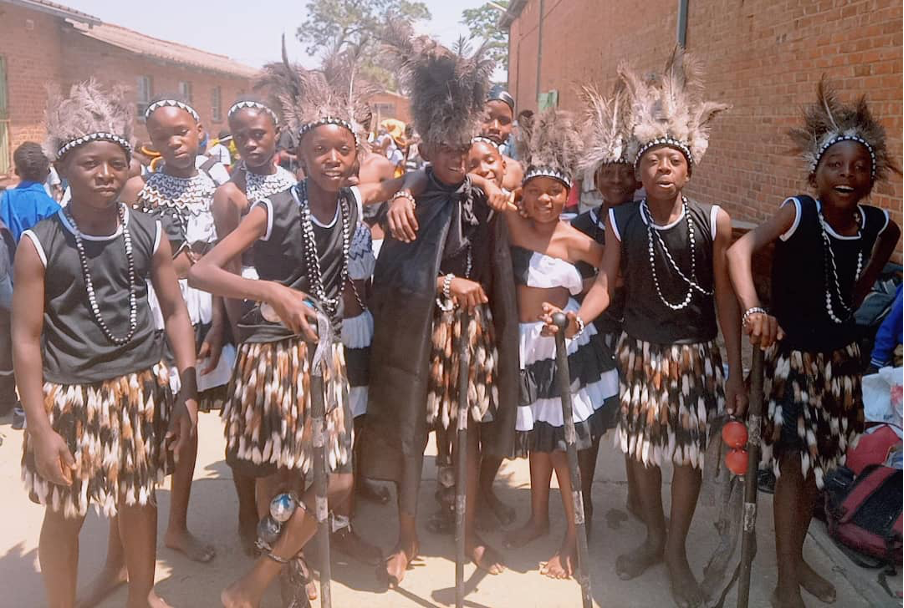
The men wear animal skins around the waist (goat, leopard), traditional hats (ngundu) with guinea fowl feathers and black and white cloths
The women, known as possessed women, wear black & white wraps. Helpers wear short skirts and black covering across their chests.
Instruments
The drums, Mutandarikwa and Gandira, are played by 2–3 people. They are accompanied by Idiophones and other props:
Hosho (shakers)
Magagada / Magavhu (ankle rattles)
Knobkerrie (carried in hand)
Occasions
These dances are traditionally performed during
spiritual ceremonies, ancestral worship, rainmaking, and harvest celebrations.
Modern uses of these dances include cultural exhibitions and entertainment events.
The Dance Format
Drummers set the rhythm
Helpers form a circle, singing and clapping
Dancers enter in pairs (male/female)
The possessed dancer often dances in the center
Leg movements match the rhythmic pattern:
12 – 1234 – 123 (One-Two | One-Two-Three-Four | One-Two-Three).
Unlike other traditional dances, the feet remain grounded, sliding across the earth like flowing water.
Today, modern choreography includes more complex formations beyond the traditional circle.
🎶 Traditional Mhande Songs
1. Sekuru Manonoka
2. Chingungunde
3. Mudzimu Dzoka
4. Musango Ndodzungaira
5. Dzinonwa Muna Save
6. Tora Huta Hwako
7. Chikweza ChamaNdiyanga
8. Wada Ne’nanga
9. Chembere dzeMhande Mvura Ngainaye 10. Avo Ndibaba