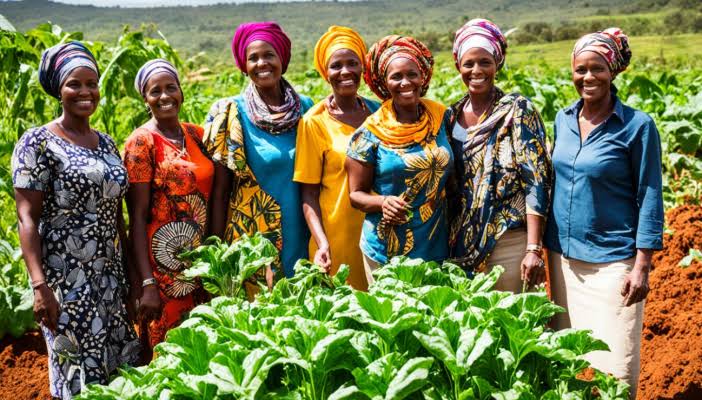








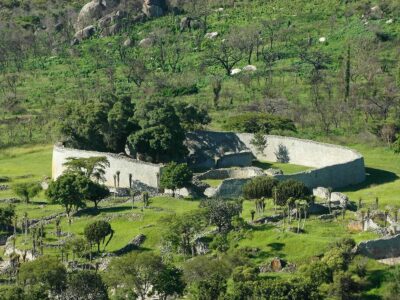
The granite hills of the Zimbabwean plateau do not merely hold stone; they hold memory. In a sweeping effort to reclaim the narrative of African sovereignty, the BGUN community has launched a comprehensive campaign to celebrate the continent’s agricultural genius and dismantle centuries of colonial misinformation. For too long, the story of Africa’s farming heritage was told through a lens of absence, portraying the landscape as a blank space waiting for external salvation.
Today, this narrative is being systematically deconstructed by a generation of Zimbabwean scholars who are placing African voices at the center of their own history. This movement is guided by the timeless African proverb: “Until the lion tells his side of the story, the tale of the hunt will always glorify the hunter”. This adage serves as the moral compass for a mission that proves the magnificent walls of Great Zimbabwe did not rise from a vacuum, but from a foundation of sophisticated indigenous science and organized labour.
As the legendary novelist Chinua Achebe once wrote, “If you don’t like someone’s story, write your own.” Adding a modern philosophical layer to this reclamation, Joshua Maponga III reminds us that, “We are not Africans because we were born in Africa, we are Africans because Africa was born in us.” This internal realization is the fuel for the warriors of the mind who understand that a people without a history is like a tree without roots.Stanlake Samkange pioneered this recovery, documenting how colonial authorities actively feared and undermined the advanced agricultural systems of the Ndebele and Shona. Samkange said, ‘The earth is a beehive; we all enter by the same door but live in different cells.’ By recognizing the earth as a “beehive”, where different cultures inhabit unique, “cells”, scholars like Professor Terence Ranger explored the “spiritual ecologies” of the Matopos Hills. Ranger’s work demonstrated that rainfall, rocks and agricultural cycles were interwoven with political authority in ways colonial officials could never comprehend.
The Architecture of Agricultural Power
The rise of the great civilizations on the plateau was a result of deliberate governance and the sophisticated organization of labour. As the traditional proverb suggests, “He who destiny has chosen to be king, no one can stop,” signifying that the power of the Mutapa state was rooted in a dynamic and unstoppable political system. Professor S.I.G. Mudenge’s research highlighted complex institutions of taxation that organized agricultural production long before European arrival. As Ngugi wa Thiong’o advocates for the “decolonisation of the mind,” Professor David Beach fundamentally reshaped our understanding by proving that Shona societies evolved continuously. These ancestors were not frozen in time; they were master innovators who adapted to environmental and economic pressures with agility and foresight.
They embodied the truth that “wisdom is like a baobab tree; no one individual can embrace it,” a proverb emphasizing the communal nature of innovation. This collective wisdom allowed Bantu-speaking populations, to act as active agents of technology. As the Sahara grasslands desertified, these master innovators moved south, domesticating native cereals like sorghum and millet. They carried a toolkit of metallurgy and sustainable systems that supported thriving civilizations for centuries. As the renowned scholar Cheikh Anta Diop argued, “African history must be viewed through the lens of its own internal technical and social evolution”.
Philosophical Foundations: To Farm is to Pray
This deep-rooted sovereignty is anchored in a unique philosophical foundation: for our ancestors, to farm was to pray. In African culture, it was impossible to separate agriculture from social and spiritual worldviews. The land was viewed as a sacred trust, reflecting the traditional philosophy: “The land belongs to the many who are dead, the few who are living and the countless many yet to be born”.
Erasmus Masitera’s research into models like zunderamambo (agricultural welfare) and pfumvudza (conservation farming) proves that indigenous systems were designed for communal resilience. This mirrors Chinua Achebe’s observation that “A man who calls his kinsmen to a feast does not do so to save them from starving… we come together because it is good for kinsmen to do so.” It also aligns with Joshua Maponga’s teaching on Ubuntu, where he notes, ‘I am because we are.’ Agriculture was the glue that bound the community together, providing both food and social cohesion.
Knowledge for Tomorrow: The Modern Strategic Tool
Ancestral knowledge is no longer a matter of historical curiosity; it has become a strategic tool for the modern challenges of climate change. Current research by scholars like Ruth R. Chinomona has documented how local knowledge of 23 indigenous woody plants, such as the baobab and monkey orange, serves as a vital coping strategy during extreme droughts. This research validates ancient methods as scientifically sound and essential for the survival of contemporary ecosystems.